Quick answer
Make-to-order (MTO) clothing means an Indian factory makes your design after you order, usually from 25 to 50 pieces per design. You send a brief, approve a sample (7 to 14 days), then bulk production takes about 30 to 45 days before shipping. Expect to pay an advance, to approve a sample before bulk, and to plan roughly 12 to 16 weeks by sea or 8 to 11 weeks by air from agreed brief to goods in your country.
If you run a boutique, an online store or a small label in New York, London, Toronto, Singapore, Kuala Lumpur or Johannesburg, you have probably been quoted 500 or 1,000 pieces per style by a large factory. That is not how many small brands want to buy. They want to test five designs at fifty pieces each, learn what sells, and reorder. This guide explains how make-to-order manufacturing in India works for that kind of buyer, what to expect at each step, and where things usually go wrong.
We built the BizTorq make-to-order section because we spend our days inside India's textile markets in Surat and Ahmedabad, and we keep meeting small, capable factories that can make western wear to order but are hard for overseas buyers to find and trust.
What "make-to-order" actually means
Make-to-order is different from buying ready stock and different from large-volume OEM. The factory makes your garments after you place the order, to your design, fabric, size chart and label. Because nothing is made in advance, a factory can say yes to small quantities, as long as the fabric and labour make sense for them.
| Model | Typical quantity | Who it suits | Trade-off |
|---|---|---|---|
| Ready stock | As few as one carton | Fast restocks, testing the market | Not exclusive; same product others can buy |
| Make-to-order | 25 to 300 pieces per design | Small brands, boutiques, online sellers | Higher cost per piece; 12 to 16 weeks by sea |
| Large-volume OEM | 1,000+ pieces per style | Established labels, retail chains | High commitment; needs working capital |
Why source from India
The main reason is the supply chain. Cloth, trims, printing, embroidery, washing and stitching sit close together. Ahmedabad is known for denim and cotton shirting. Surat produces vast quantities of printed, embroidered and synthetic cloth. Tiruppur is the knitwear town. Delhi NCR and Bengaluru have large export garment houses. A factory near one of these clusters can buy fabric in the morning and cut it in the afternoon, which is what makes short runs possible.
It also helps that Indian factories are used to making garments for overseas labels, so many already understand size charts, labelling and packaging for export. We are not claiming India is cheapest for every product or always the right answer: if you need ready stock this week, or the lowest price per piece at any quality, other options may suit you better.
The six steps from idea to delivery
1. Write a brief
A good brief is short and specific. Include the product (for example, wide-leg jeans in rigid denim), quantity per design, colours and size split, target price, country and the date you need goods in your market. Add a sketch, reference photos or a tech pack if you have one. See our tech pack guide.
2. Get matched and quoted
A written quote should state price per piece, the basis (FOB, CIF or DDP), the fabric, the minimum order, sample terms and lead time. If a quote is a single number on WhatsApp, ask for more detail before you go further.
3. Approve a sample
A pre-production sample takes about 7 to 14 days, then courier time. Check measurements against your size chart, wash it and measure again, and look at stitching, print placement and trims. Ask for corrections in writing, with photos.
4. Confirm and pay the advance
After approval, confirm sizes, colours, labels, packaging and delivery date in a proforma invoice. Many factories ask for an advance, commonly 30 to 50 percent, to start production, with the balance due before shipment or against documents.
5. Production and checks
Bulk takes about 30 to 45 days for many styles. Ask for photos at cutting and stitching stages and a final check before packing. For bigger orders, a third-party inspection before shipping is inexpensive insurance.
6. Ship
Goods ship by sea or air on FOB, CIF or DDP terms. Our timeline planner adds typical transit and customs time for your country so you can work back from your launch date. For a rough idea of duty on clothing exports, see the export duty calculator.
What affects price per piece
- Quantity. Setup cost is shared across fewer pieces in a small batch, so the unit price is higher than at 500 pieces.
- Fabric. Weight, composition and mill are usually the biggest cost driver.
- Make. Pockets, seams, embroidery, prints and washes add stitching and finishing time.
- Trims and labels. Zips, buttons and branded labels each have minimums.
- Terms. FOB, CIF and DDP include different amounts of freight and duty. Compare landed cost, not factory price alone.
Where orders go wrong
- A vague brief. "Like this but better" produces a guess. Send measurements and photos.
- Skipping the sample. Never pay for bulk before holding an approved sample.
- Paying everything upfront. Use an advance and a balance against shipping documents.
- Ignoring the calendar. Count sea transit, customs and your season.
- Forgetting import rules. Check labelling, fibre content and duty for your country before production. See our import checklist.
Which products work best in small batches
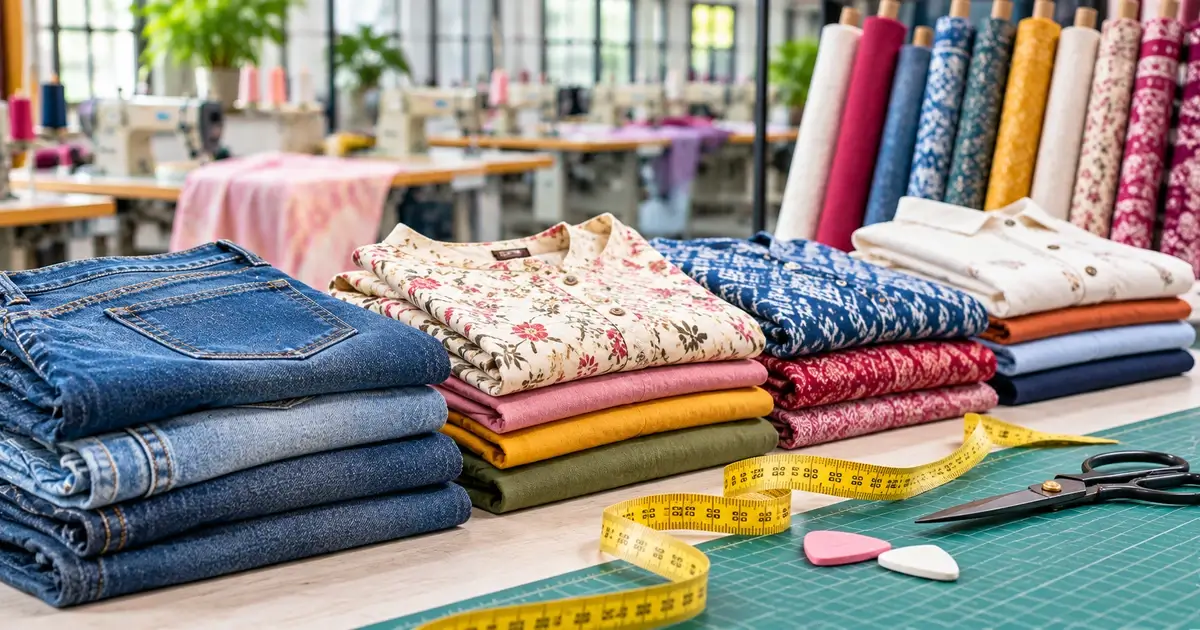
Simpler styles in stock fabric are easiest: tops and blouses, dresses and co-ord sets. Jeans and denim are strong in India but need more care over wash and fit. T-shirts and knitwear work well when you use a knit hub like Tiruppur. For kidswear, budget extra time for safety rules.
Start small, then reorder
A sensible first order is a capsule of three to six designs at the minimum quantity. Learn the factory's process, check quality and delivery, then reorder what sells. Reorders are faster because the pattern and sample are already approved. If you are starting a brand from scratch, read our guide on starting a private-label brand in Surat and Ahmedabad, and the comparison of Surat vs Ahmedabad to decide where to source.
Ready to try? Send us your brief and we will match you with a factory that makes your product at your quantity.
Frequently asked questions
What is make-to-order clothing manufacturing?
The factory makes your garments only after you place an order, to your design, fabric, size chart and label. Nothing is made in advance, which is why small quantities are possible.
What is the minimum order for make-to-order clothing from India?
Many small-batch factories start at 25 to 50 pieces per design, split across sizes and colours. Special fabrics, heavy washes or embroidery can raise the minimum.
How long does it take to make clothing to order in India?
About 7 to 14 days for the first sample, then roughly 30 to 45 days for bulk production after approval, plus shipping. Allow about 12 to 16 weeks by sea or 8 to 11 weeks by air from agreed brief to goods in your country.
Do I need a tech pack?
Not to start. A clear sketch plus reference photos or a garment you like is enough for a first sample. A tech pack makes the sample more accurate and speeds up revisions.
How does sampling work and what does it cost?
The factory makes a pre-production sample for you to approve. Sample terms differ: some charge a fee credited against the bulk order, others charge courier only. Get the terms in writing.
How should I pay a clothing factory in India?
Pay against a written quote or proforma invoice. A common arrangement is an advance to start production and the balance before or against shipment. Avoid paying everything upfront before an approved sample.
Can I put my own label and packaging on the garments?
Yes. Woven or printed neck labels, care labels, hang tags and polybags can be made to your brief, often with their own minimums.
What is the difference between FOB, CIF and DDP?
FOB means the factory delivers the goods to the Indian port and you handle freight and clearance. CIF includes freight and insurance to your port. DDP means the seller delivers to your door with duty paid. Compare the landed cost for each.
Is clothing from India cheaper than from other countries?
Not always. India is strong in cotton, denim, prints and embroidery and can offer small batches, but small batches cost more per piece. Compare landed cost, quality and lead time for your product.
How do I check quality before shipment?
Approve a sample, ask for photos during production, request a pre-shipment check, and for bigger orders hire a third-party inspector. Measure and wash the sample yourself.
Which Indian cities make clothing for export?
Ahmedabad (denim, cotton shirting), Surat (prints, embroidery, synthetic cloth), Tiruppur (knitwear), Delhi NCR and Bengaluru (export garment houses) are major hubs.
Will a factory copy a branded design?
Reputable factories will not copy another brand's logo, label or protected design. You can send references for fit, wash and detail, and they will make something in that style.