
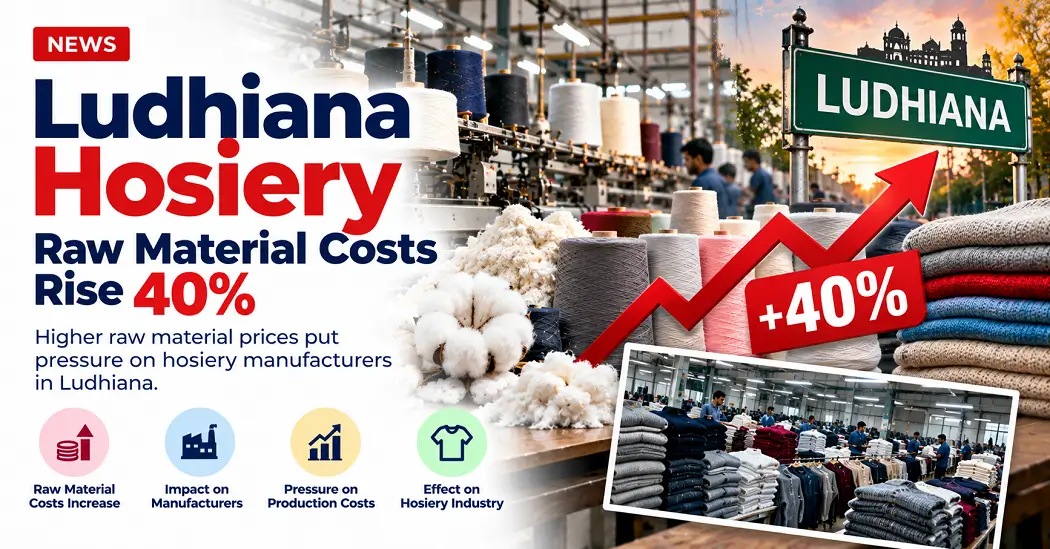
Ludhiana, which makes about 95% of India's winterwear, is heading into its main selling season under heavy cost pressure. Hosiery, knitwear and garment makers say their raw material bills have gone up by roughly 40% within a few months, according to reports published on 22–23 October 2026, and they cannot pass the full increase on to buyers.
What has become costlier
- Polyester inputs: PTA, the main raw material for polyester, has risen from about ₹105–110 a kg to ₹145 a kg, according to Amit Pandey of Vardhman Polytex. Polyester prices are up about 30%. Official wholesale price data shows PTA up 49% and MEG up 35% year on year in September.
- Crude oil: India's crude basket averaged about $116 a barrel in September, up from about $90 in August, raising the cost of polyester, nylon and spandex.
- Dyes and chemicals: wholesale inflation for chemical products rose to 16.74% in September. Industry sources also point to reduced dye supply from China.
- Cotton: domestic Shankar-6 cotton prices have risen about 18%, as demand shifts to India and output dips.
- Other costs: yarn, sewing thread, packaging and wages have all gone up.
Small units hit hardest
Ludhiana has about 1.4 lakh MSMEs making hosiery, knitwear and garments. Larger companies with steady cash flow are coping, but small units with annual sales of ₹1–2 crore and margins of 8–10% are in difficulty, and traders say many micro units are close to shutting. Vijay Kumar of Nato International said supply from manufacturers to wholesalers has been cut by nearly half and expects the winter and festive season to stay flat. The industry has also reported a week-long strike over shrinking profitability.
Kapil Joshi, president of the Purana Bazar Hosiery Association, has asked for simpler regulations. At the Centre, the first meeting of the Development Council for Textile Industry on 6 October discussed stable supplies of cotton, man-made fibre, yarn, dyes and chemicals, and support for MSMEs. Punjab's Textile and Apparel Policy 2026 offers electricity duty exemption and SGST reimbursement for eligible units.
The squeeze mirrors what Surat's weavers and Bhiwandi's powerloom units have reported this year, as fibre and yarn costs rise faster than fabric and garment prices.