Quick answer
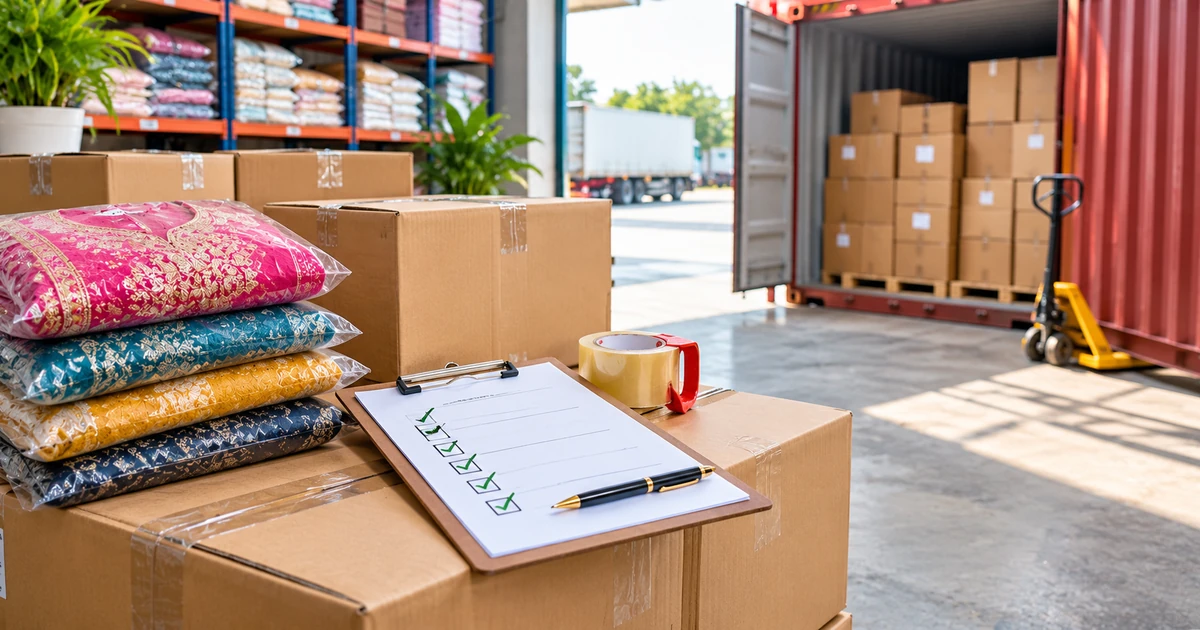
Before you import clothing from India, confirm five things: the shipping terms (FOB, CIF or DDP), the documents the factory will provide, labelling and safety rules for your market, an estimate of duty and taxes from your customs broker, and your timeline (about 4 to 7 weeks by sea after dispatch to US, UK or Canadian ports, plus production). This is general guidance, not legal or customs advice.
Importing clothing is not hard, but surprises are expensive. This checklist is for small brands, boutiques and online sellers placing a first make-to-order order from India. It is general information: rules and rates change, and your customs broker or a compliance adviser is the right person to confirm them for your products. We use it ourselves when briefing buyers.
New to the process? Start with our make-to-order guide. For country pages, see USA, UK and Canada.
1. Choose your shipping terms
| Term | What the factory does | What you do |
|---|---|---|
| FOB | Delivers goods to the Indian port and clears them for export | Book freight, insure, clear customs at your end |
| CIF | Also pays freight and insurance to your port | Clear customs and pay duty at your end |
| DDP | Delivers to your door, duty paid | Receive goods; confirm what is included |
FOB gives you control and often the clearest pricing. DDP is simplest for small buyers but you should check what is included and who is the importer of record. Compare the landed cost in each case.
2. Ask for the right documents
- Commercial invoice with a clear description of each product, fibre content and value.
- Packing list with cartons, pieces and weights.
- Bill of lading (sea) or air waybill (air).
- Certificate of origin, if you need it to claim a trade preference.
- Any test reports or certificates you asked for.
Show the list to your customs broker before production, not after the goods ship.
3. Check labelling and product rules
Most markets require specific information on garments, such as fibre content, country of origin and care instructions, and the format varies by country. Canada, for example, has bilingual expectations in many cases. Children's clothing has stricter rules on matters like drawstrings, small parts, flammability and chemical limits. Confirm the rules for your product and market before design, and give the factory the exact label text.
4. Estimate duty and taxes
Import duty depends on the product classification, the fabric and fibre, and trade rules in force. Sales tax or VAT may apply. Ask your broker for a classification and an estimate based on your product, and use our export duty calculator for a rough comparison. Treat any online estimate as a starting point.
5. Plan freight and timeline
- Sea freight: about 4 to 7 weeks after dispatch to US, UK or Canadian ports, plus inland transport and clearance.
- Air freight: about 4 to 8 days after dispatch, plus clearance. Costs more per kilo.
- Production: sample 7 to 14 days, bulk 30 to 45 days after approval.
Put your dates into the timeline planner and work back from your launch date. If it looks tight, consider air for a first small drop and sea for the rest.
6. Choose a forwarder and broker
Ask for quotes from a forwarder and a customs broker in your country before you place the order. Ask what they charge for clearance, port fees, inland delivery and any inspection. On the Indian side, transporters and forwarders can be found in our transport directory.
7. Insure the cargo
Insurance for sea and air freight is usually inexpensive compared with the value of the goods. On FOB terms, arrange it yourself.
8. Inspect before you ship
For bigger orders, a third-party inspection before shipment catches problems when they are cheap to fix. Ask the factory for pre-shipment photos and a packing check in any case.
9. Keep records
Keep the quote, proforma invoice, sample approval, documents and payment receipts for each order. They help with disputes, customs queries and reorders.
A quick pre-order checklist
- Terms agreed in writing (FOB, CIF or DDP).
- Landed cost estimated with your broker.
- Labels and safety rules confirmed for your market.
- Sample approved in writing.
- Advance and balance terms agreed.
- Timeline checked against your launch date.
- Forwarder and insurance arranged.
When you are ready, send us your brief. See also how to export textiles from Surat for the Indian side of the process.
Frequently asked questions
Do I need an import licence to bring clothing from India?
Requirements depend on your country and whether you are an importer of record. Ask your customs broker what registration you need for commercial imports.
What is the difference between FOB and DDP?
On FOB the factory delivers to the Indian port and you handle freight and clearance. On DDP the seller delivers to your door with duty paid. Check what is included in each.
How long does shipping from India to the USA, UK or Canada take?
Roughly 4 to 7 weeks by sea after dispatch, plus clearance and inland transport. Air freight takes about 4 to 8 days after dispatch.
How is import duty on clothing decided?
It depends on the product classification, fibre content and the trade rules in force. Ask your customs broker for a classification and estimate.
What labels must clothing carry?
Rules vary by country but commonly cover fibre content, country of origin and care instructions. Children's clothing has stricter rules. Confirm for your market before production.
Which documents will the factory provide?
Usually a commercial invoice, packing list and shipping document, and where needed a certificate of origin. Ask for the list before production.
Should I ship by sea or air?
Sea is cheaper and slower; air is faster and costs more per kilo. Many small buyers use air for a first drop and sea for the rest.
Can the factory ship to Amazon or a warehouse?
Yes, if you give label and carton rules in the brief. Confirm who pays for extra labelling or prep.
Do I need cargo insurance?
It is strongly advisable. On FOB terms, you arrange it yourself. It is usually small compared with goods value.
What is a customs broker and do I need one?
A broker clears goods through customs for you. Most small importers use one. Ask for a quote before you order.
Can you give me exact duty rates?
No. Rates depend on product details and change. Ask your customs broker and use our duty calculator only as a rough guide.
What if the goods arrive damaged or wrong?
Document with photos, notify the factory and your insurer quickly, and check your terms. A pre-shipment inspection reduces the risk.