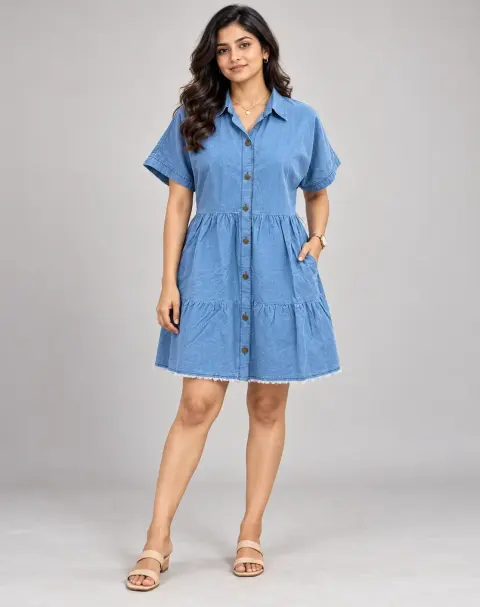
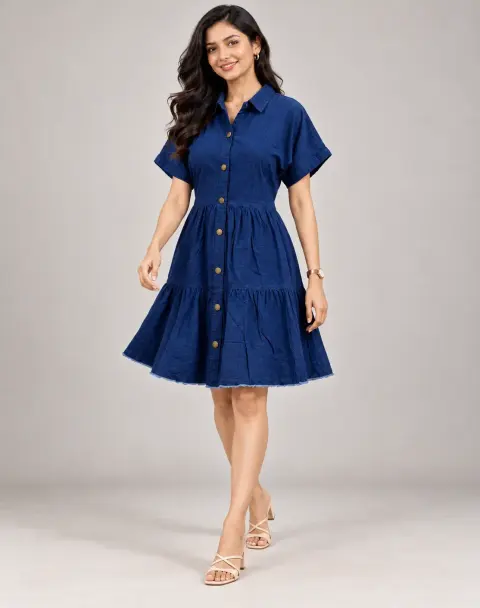
Bangladeshi boutiques, importers and online sellers use Indian factories to make dresses in runs of 25 to 100 pieces per style. Here is how to brief one for Bangladesh, what to specify, and what goes wrong.
Quick answer
Yes. Factories in Surat, Ahmedabad and other Indian hubs make dresses to your design, fabric, fit and label for buyers in Bangladesh, from 25 pieces per design. You send a brief, receive a written quote in about two working days, approve a sample in 7 to 14 days, and bulk production takes 30 to 45 days.
The typical buyer is a boutique owner or an online seller in Dhaka who wants printed and embroidered dresses, summer wear and party dresses in small runs. Customers expect good fabric and finishing at a fair price.
Fabrics that work well for this: rayon challis, viscose crepe, cotton voile, cotton poplin and linen blends. Surat and Ahmedabad factories buy these in the market, which is why runs of 25 to 50 pieces per design are practical.
Many Bangladeshi buyers sell in S to XXL or free size, with measurements in inches. Send your size chart and ask for the sample to be measured against it. Festive wear often needs a little extra length and ease.
Demand peaks around Eid, Pohela Boishakh (the Bengali new year in April), Durga Puja and the wedding season. Brief at least four to five months ahead of the peak, and add a buffer for border or port delays.
Trade between India and Bangladesh has been affected by route and port restrictions on both sides in recent years, so confirm with your clearing agent which route and which import permits apply to clothing before you order. Duty and taxes depend on your garment code, so get a quote from a clearing agent.
Yes, many Surat and Ahmedabad factories accept 25 to 50 pieces per design when they use fabric from the market. If you need cloth printed or woven specially for you, the minimum is higher because the fabric mill sets it. Say so in your brief and the quote will show which applies.
Rayon challis, viscose crepe and cotton voile are popular for drape and print, cotton poplin for structure, and linen blends for warm weather. Ask for the fabric weight and composition in writing and request a wash test.
Yes. Send your artwork as a high-resolution file with the repeat size and colour references. The factory will make a strike-off so you can check colours before bulk printing.
Printed cotton and viscose dresses, embroidered festive dresses and relaxed summer styles. Test a few designs at 25 to 50 pieces first.
It depends on current rules and your timing. Ask your clearing agent which routes are open for clothing, and compare cost and time, then plan the order with a buffer.
Ask your clearing agent what your sales channel and customs route need. Most buyers ask for fibre content and care instructions in English, with the brand label and size. Give the factory the exact text and approve a photo of the printed label before bulk.
The importer pays duty and taxes unless you agree delivered terms with the seller. The amount depends on your garment code and the route, so get a quote from a clearing agent, and confirm the current rules before you place the order.
It depends on the route you use, by land or sea. Ask your clearing agent for current times, then add time for the sample and bulk production. Use the timeline planner to build in buffers, especially before Eid and the wedding season.
Send your size chart with finished measurements, ask for a sample in a middle size, and compare it flat against your chart before you approve bulk. Many Bangladeshi buyers sell in S to XXL or free size, with measurements in inches. Send your size chart and ask for the sample to be measured against it. Festive wear often needs a little extra length and ease.