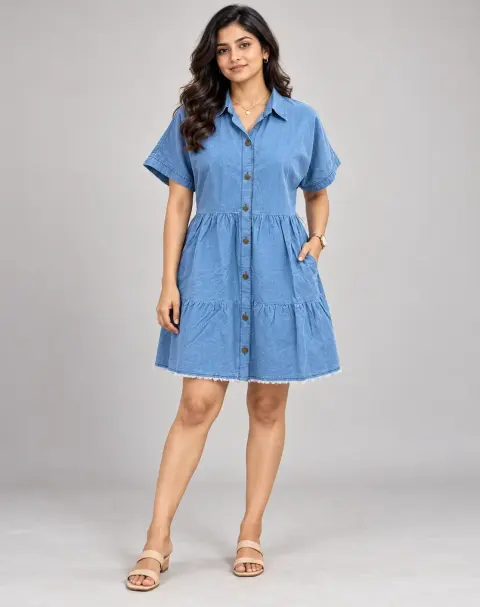
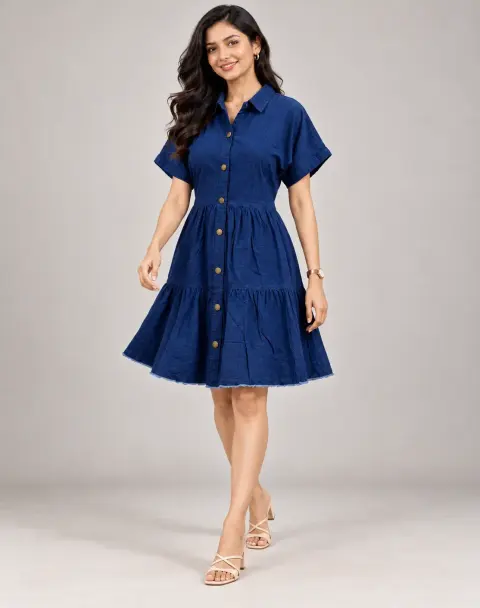
Canadian boutiques and online brands use Indian factories to make dresses in runs of 25 to 100 pieces per style. Here is how to brief one for Canada, what to specify, and what goes wrong.
Quick answer
Yes. Factories in Surat, Ahmedabad and other Indian hubs make dresses to your design, fabric, fit and label for buyers in Canada, from 25 pieces per design. You send a brief, receive a written quote in about two working days, approve a sample in 7 to 14 days, and bulk production takes 30 to 45 days, then about 35 to 48 days by sea or 4 to 8 days by air to Canada.
The typical buyer is a boutique owner in Ontario, British Columbia or Alberta, or the founder of a Shopify or Instagram label. They want prints and silhouettes of their own for a short summer and a long cardigan season, and they test styles at 25 to 100 pieces before reordering.
Fabrics that work well for this: rayon challis, viscose crepe, cotton voile, cotton poplin and linen blends. Surat and Ahmedabad factories buy these in the market, which is why runs of 25 to 50 pieces per design are practical.
Canadian women's sizing follows the US scale: 0 to 16 or XS to XL, with many brands adding extended sizes. Send measurements in both inches and centimetres, because Canadian shoppers and customs paperwork use both.
Canadian spring and summer lines are normally briefed from November to January, and autumn lines from May to June. Winter lasts long, so layering pieces sell for more months than in warmer markets.
Yes, many Surat and Ahmedabad factories accept 25 to 50 pieces per design when they use fabric from the market. If you need cloth printed or woven specially for you, the minimum is higher because the fabric mill sets it. Say so in your brief and the quote will show which applies.
Rayon challis, viscose crepe and cotton voile are popular for drape and print, cotton poplin for structure, and linen blends for warm weather. Ask for the fabric weight and composition in writing and request a wash test.
Yes. Send your artwork as a high-resolution file with the repeat size and colour references. The factory will make a strike-off so you can check colours before bulk printing.
Fibre content on the label needs to be shown in both English and French, so an English-only label is not enough. Ask the factory to print both languages on the label and approve a photo of it before bulk.
Yes, if you design for layering: long sleeves, midi and maxi lengths, and heavier cotton, viscose or linen blends. Spring and summer dresses are the easier first order, and you can add a heavier range once you know your customers.
Under Canada's textile labelling rules, garments need a permanent label showing fibre content in English and French and the identity of the dealer, such as a name and address or a CA number. Give your factory the exact label text, and approve a photo of the printed label before bulk.
The importer pays duty and GST unless you agree delivered terms (DDP) with the seller. Duty on most clothing is usually 17 to 18 percent, and GST is charged on the duty-paid value. Confirm the rate for your garment code with a Canadian customs broker.
Sea freight to Vancouver or Toronto takes about 35 to 48 days on the water, and air freight 4 to 8 days door to door. In total, plan on about 13 to 17 weeks from agreed brief to goods in Canada by sea, and 8 to 12 weeks by air. Use the timeline planner to work back from your launch date.
Send your size chart with finished measurements, ask for a sample in a middle size, and compare it flat against your chart before you approve bulk. Canadian women's sizing follows the US scale: 0 to 16 or XS to XL, with many brands adding extended sizes. Send measurements in both inches and centimetres, because Canadian shoppers and customs paperwork use both.