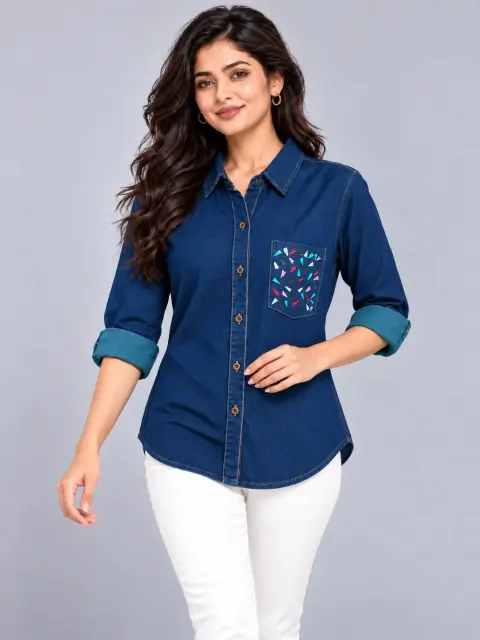
Chinese importers and cross-border online sellers use Indian factories to make shirts in runs of 25 to 100 pieces per style. Here is how to brief one for China, what to specify, and what goes wrong.
Quick answer
Yes. Factories in Surat, Ahmedabad and other Indian hubs make shirts to your design, fabric, fit and label for buyers in China, from 25 pieces per design. You send a brief, receive a written quote in about two working days, approve a sample in 7 to 14 days, and bulk production takes 30 to 45 days.
The typical buyer is a small brand or boutique that wants shirts in handloom-look cotton and linen, relaxed fits and prints. Indian shirts stand out because of the fabric and finish rather than price.
Fabrics that work well for this: cotton poplin, linen, linen blends, cotton voile and rayon. Surat and Ahmedabad factories buy these in the market, which is why runs of 25 to 50 pieces per design are practical.
Chinese sizing runs smaller than Western sizing, and many brands give a fit chart with height and bust, waist and hip in centimetres. Send your own chart and ask for the sample to be measured against it.
Chinese shopping seasons follow the calendar of festivals and sales days, and online brands brief new styles well ahead of the big sales. Plan the first delivery with time to spare for label approval and customs clearance.
Clothing sold in China normally needs a label in Chinese with fibre content, care instructions, the manufacturer or importer and the safety category. Duty, VAT and the import route depend on your garment code and whether you sell through cross-border e-commerce or as a general trade importer, so confirm all of it with a Chinese customs broker before you order.
Yes, many Surat and Ahmedabad factories accept 25 to 50 shirts per design when the fabric is in stock. Specially made fabric needs a higher minimum.
Cotton poplin for a crisp look, linen or linen blends for a relaxed summer shirt, and rayon for drape. Ask for a wash test before you approve.
Yes. Send your label design and button choice, and approve the sample with both before bulk.
Cotton poplin, linen and linen blends, and handloom-look cotton. Ask for the weight and composition, and request a wash test.
Yes. Send your label design and the Chinese label text, and approve a photo of both before bulk.
Clothing sold in China normally needs a Chinese-language label with fibre content, care instructions, the manufacturer or importer and the safety category. Confirm the exact wording with your importer, then give the factory the text and approve a photo of the printed label before bulk.
The importer of record pays duty and import tax unless you agree delivered terms with the seller. The amount depends on your garment code and your import route, so get a quote from a Chinese customs broker before you order.
Timing depends on the route and the port. Ask your forwarder for current sea and air times, then add time for the sample, bulk production and label approval. Use the timeline planner to build in buffers for your first order.
Send your size chart with finished measurements, ask for a sample in a middle size, and compare it flat against your chart before you approve bulk. Chinese sizing runs smaller than Western sizing, and many brands give a fit chart with height and bust, waist and hip in centimetres. Send your own chart and ask for the sample to be measured against it.