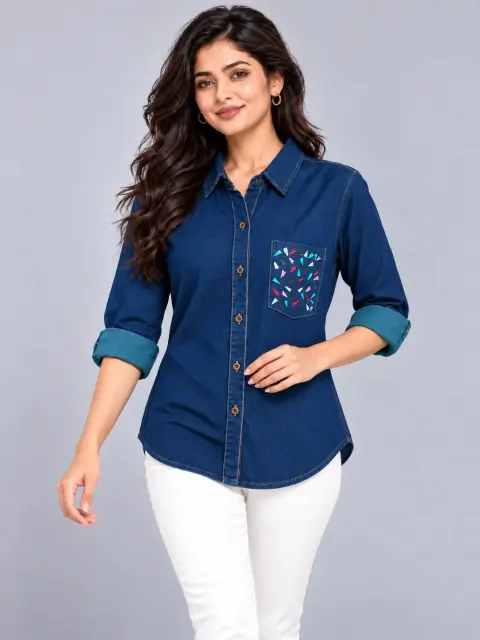
German boutiques and online brands use Indian factories to make shirts in runs of 25 to 100 pieces per style. Here is how to brief one for Germany, what to specify, and what goes wrong.
Quick answer
Yes. Factories in Surat, Ahmedabad and other Indian hubs make shirts to your design, fabric, fit and label for buyers in Germany, from 25 pieces per design. You send a brief, receive a written quote in about two working days, approve a sample in 7 to 14 days, and bulk production takes 30 to 45 days, then about 26 to 38 days by sea or 3 to 6 days by air to Germany.
The typical buyer is an online brand or a boutique that sells shirts in cotton, linen and blends, from relaxed fits to dressier styles. German customers expect consistent sizing and careful finishing, so the sample step matters.
Fabrics that work well for this: cotton poplin, linen, linen blends, cotton voile and rayon. Surat and Ahmedabad factories buy these in the market, which is why runs of 25 to 50 pieces per design are practical.
German women's sizes run on the European scale, usually 34 to 46, where 36 is roughly a small and 38 a medium. Send measurements in centimetres, and give your own size chart, because brands differ.
German spring and summer lines are normally briefed from October to December, and autumn lines from April to May. Shoppers expect natural fibres, clear care information and consistent sizing, and returns are common in online fashion.
Yes, many Surat and Ahmedabad factories accept 25 to 50 shirts per design when the fabric is in stock. Specially made fabric needs a higher minimum.
Cotton poplin for a crisp look, linen or linen blends for a relaxed summer shirt, and rayon for drape. Ask for a wash test before you approve.
Yes. Send your label design and button choice, and approve the sample with both before bulk.
Yes. Send a size chart in European sizes, with finished measurements in centimetres, and ask for a sample in a mid size. Measure it flat against your chart before you approve bulk.
Cotton poplin, cotton twill, linen and linen blends sell well. Ask for the weight and composition, and request a test for colourfastness and shrinkage.
Garments sold in the EU need the fibre composition on a label, normally in the language of the country of sale, so German for German customers. Care symbols are expected by shoppers. The product also needs the contact details of the importer or responsible person in the EU. Give the factory the exact label text and approve a photo before bulk.
The importer pays duty and import VAT unless you agree delivered terms (DDP) with the seller. Duty on Indian clothing is up to 12 percent today and import VAT is 19 percent, which a VAT-registered business can normally recover. The India–EU trade agreement was concluded in January 2026 but does not apply until it is signed and in force, so check the rate on your shipment date.
Sea freight to Hamburg or Bremerhaven takes about 26 to 38 days on the water, plus inland transport, and air freight 3 to 6 days door to door. Plan on about 11 to 15 weeks from agreed brief to goods in Germany by sea, and 7 to 10 weeks by air. Use the timeline planner to work back from your launch date.
Send your size chart with finished measurements, ask for a sample in a middle size, and compare it flat against your chart before you approve bulk. German women's sizes run on the European scale, usually 34 to 46, where 36 is roughly a small and 38 a medium. Send measurements in centimetres, and give your own size chart, because brands differ.