
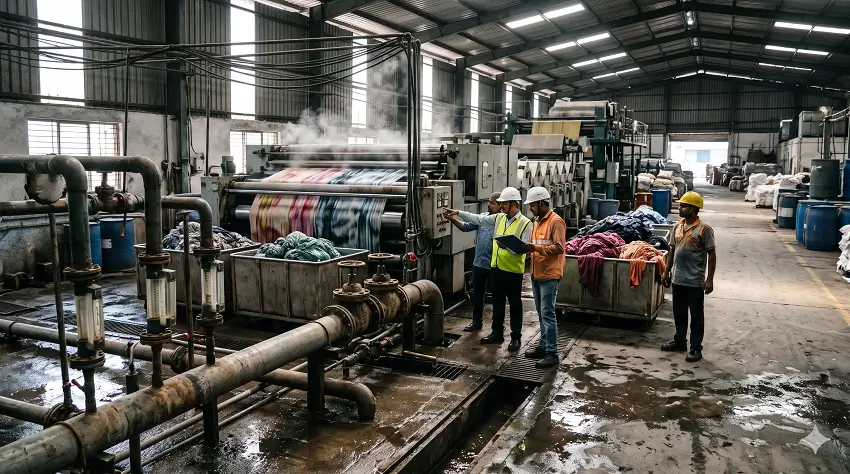
The powerloom and wet-processing hub of Bhiwandi in Thane district near Mumbai is facing fresh regulatory pressure as the Maharashtra Pollution Control Board (MPCB) issued show-cause and closure warning notices to 29 textile dyeing and processing units in mid-November 2026 over environmental compliance norms.
Why Bhiwandi Processing Units Are Under Scrutiny
Environmental inspections across the Bhiwandi industrial belt flagged discrepancies in effluent treatment, boiler emissions, and water discharge protocols. For Bhiwandi’s textile cluster—which has already battled a 60–70% surge in yarn costs earlier this year and weak grey fabric realisations—regulatory closures or mandatory plant upgrades threaten to tighten wet-processing capacity just as post-Diwali winter orders begin.
- 29 Units Flagged: Dyeing, bleaching, and sizing houses face strict deadlines to prove Common Effluent Treatment Plant (CETP) and zero-liquid-discharge (ZLD) compliance or risk power and water disconnection.
- Spillover to Surat & Ahmedabad: If processing capacity in Bhiwandi is curtailed, Mumbai wholesale merchants in Kalbadevi and Mulji Jetha Market may divert grey fabric dyeing and printing job-work to composite mills in Surat (Pandesara and Sachin GIDC) once Surat’s dyeing mills reopen from their extended Diwali break on 20 November.
South India Cotton Yarn Steady as Post-Diwali Demand Remains Soft
Meanwhile, broader domestic yarn markets are seeing a cautious post-Diwali restart. Trade reports from 13–14 November indicate that cotton yarn prices across South India (Tiruppur, Coimbatore, and Erode) as well as Mumbai have held stable, as downstream weaving and garment demand remains muted during the holiday transition week.