Surat Powerloom & Weaving

Surat Boiler Coal Hits ₹13,000/Tonne Amid Lignite Shortage: Traders Hesitate on Bulk Stock Ahead of 20 Nov Mill Restart

With Surat’s 400+ dyeing and printing mills set to reopen on 20 November 2026, boiler coal prices have jumped from ₹11,000 to ₹13,000 per tonne due to a domestic lignite shortage. Facing rising dye, chemical, and transport costs alongside slow retail off-take, wholesale traders are shifting toward confirmed make-to-order runs.

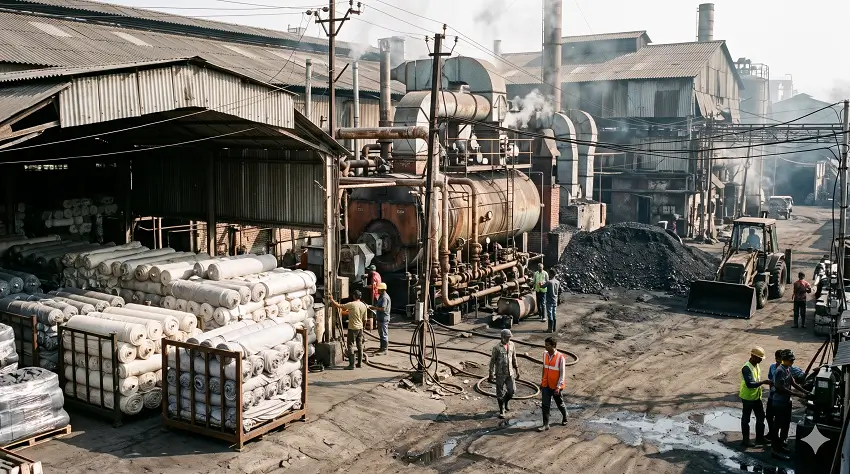
Textile dyeing mill in Surat showing industrial steam boilers, coal stockpiles, and stacks of undyed grey synthetic fabric rolls

Just 48 hours before Surat’s 400+ dyeing and printing mills in Pandesara GIDC, Sachin GIDC, and Kadodara resume operations on 20 November 2026 following their extended Diwali break, industrial processors and wholesale fabric merchants are grappling with a sharp escalation in energy and chemical inputs.

Boiler Coal Climbs to ₹13,000/Tonne on Lignite Deficit

According to ground assessments across South Gujarat’s processing belt, inadequate supplies of domestic lignite have forced dyeing houses to rely heavily on imported steam coal to fire industrial boilers. As a result, boiler coal prices have jumped from ₹11,000 to ₹13,000 per tonne over the past three weeks, accompanied by fresh hikes in disperse dyes, specialty finishing chemicals, and both road and sea freight charges.

  • Hesitation Over Unsold Festive Inventory: Wholesalers along Ring Road and Saroli report that retail inflation has dampened consumer volume—buyers who previously purchased three garments are settling for one, even where retail outlets offer “Buy One Get One Free” promotions.
  • Fear of Rate Corrections: With older Diwali stock still sitting in market godowns, traders are reluctant to send huge speculative grey fabric lots for dyeing at elevated job-work rates, fearing financial losses if downstream prices soften.

Pivot to Confirmed Make-to-Order (MTO) Wedding Production

Rather than building deep speculative inventory in daily-wear prints, progressive manufacturers in Millennium Market and Raghukul Market are prioritizing confirmed make-to-order (MTO) wedding and export contracts. By processing grey cloth strictly against verified buyer orders for bridal Dola silk, jacquard lehengas, and custom digital prints, traders protect their working capital from coal-driven job-work spikes. Use the BizTorq Fabric Margin Calculator to recalculate post-Diwali dyeing and landed piece costs.

What it means for Surat traders

Wholesale traders and garment converters should avoid over-stocking speculative printed lots when dyeing mills reopen on 20 November. Focus on pre-booked wedding catalogues and verified make-to-order buyer commitments, and factor the ₹13,000/tonne coal cost into revised dyeing job-work quotes.

Questions traders are asking

Why have boiler coal prices reached ₹13,000 per tonne in Surat in November 2026?

A shortage of domestic lignite has forced Surat textile dyeing mills to buy costlier coal, pushing boiler coal rates up from ₹11,000 to ₹13,000 per tonne.

Why are Surat textile traders hesitant to process new bulk stock right now?

High dye, chemical, coal, and transport costs have collided with cautious consumer spending, leaving traders wary of locking working capital into unsold inventory.

How are Surat manufacturers protecting margins during the wedding season?

Many mills and wholesalers are shifting to confirmed make-to-order (MTO) production via platforms like directory.biztorq.com/make-to-order/ so fabric is dyed and finished against guaranteed buyer orders.

Sources

Spotted an error? Tell us on WhatsApp.

WhatsApp Us