
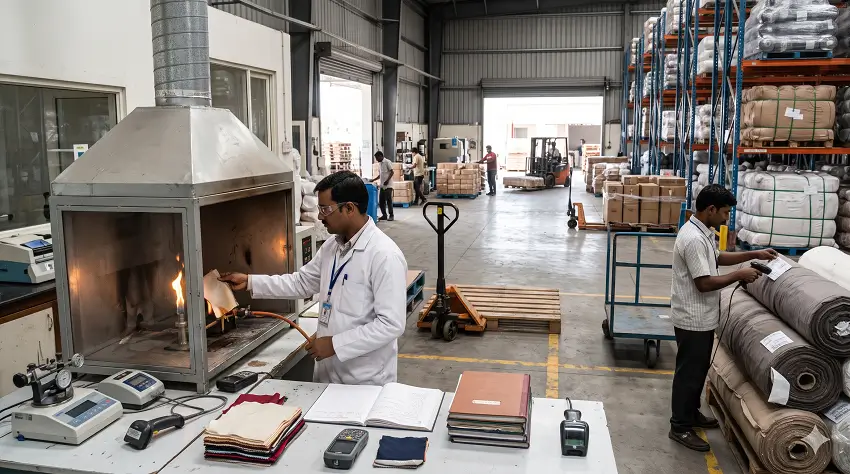
As wholesale markets and export houses across Surat and Ahmedabad resume full-scale dispatches today, Monday, 16 November 2026, following the Diwali break, custom fabric exporters face an important new customs compliance rule at Indian ports.
Mandatory Technical Qualifiers Under Circular No. 42/2026-Customs
Pursuant to Circular No. 42/2026-Customs issued by the Central Board of Indirect Taxes & Customs (CBIC), exporters of specified cotton, synthetic (man-made fibre), and knitted fabrics are now required to declare additional technical qualifiers—including flame-retardant status and chemical/weave specifications—in their electronic export shipping bills on ICEGATE from November 2026.
- Over $1 Billion Export Basket Affected: According to TexPro trade data, the covered fabric tariff lines represent an export basket exceeding $1 billion annually.
- Impact on Custom Make-to-Order (MTO) Yardage: Process houses and composite mills in Pandesara GIDC, Sachin GIDC, and Ahmedabad’s Narol belt that manufacture custom-dyed, digital-printed, or coated fabrics to buyer specifications must now include exact technical identifiers on commercial invoices and packing lists so Custom House Agents (CHAs) can file shipping bills without port holds.
Why Pre-Shipment Spec Sheets Matter for Export Orders
Trade compliance experts note that the CBIC mandate aligns with rising technical scrutiny in the EU, US, and GCC markets, as well as the growth of Surat’s technical textile exports. Export buyers commissioning custom fabric production should ensure their purchase orders clearly state GSM, fibre blend percentages, HSN codes (searchable via the BizTorq GST & HSN Finder), and whether flame-retardant or specialty chemical finishes have been applied.
International buyers and sourcing agents looking for export-compliant mills that provide complete lab testing and customs documentation can browse verified suppliers on the BizTorq Make-to-Order & Custom Manufacturing Portal.