
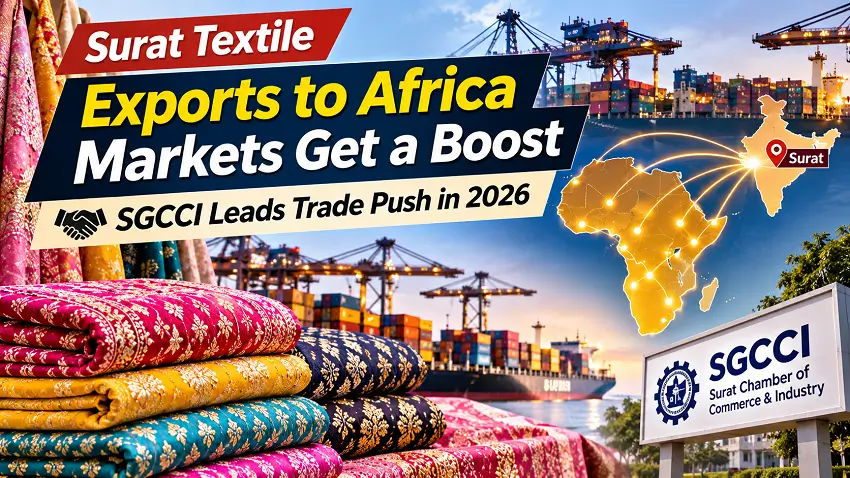
As domestic trading desks along Ring Road enter the annual Diwali hiatus, South Gujarat’s export houses are setting their sights on international expansion. Coordinated by the Southern Gujarat Chamber of Commerce and Industry (SGCCI) and regional export councils, Surat textile manufacturers are preparing direct bilateral trade engagements with key African commercial hubs, including Nigeria, Kenya, Tanzania, and South Africa.
Moving Past Dubai Re-Export Intermediaries
Historically, a massive share of Surat’s synthetic polyester and blended fabric reaching African consumers was transshipped via Dubai’s wholesale markets (such as Deira and Murshid Bazaar). Middle Eastern trading houses have long imported bulk grey and processed yardage from Surat, re-branding and mark-pricing the consignments before re-exporting to West and East Africa.
Surat’s leading fabric converters in Sachin GIDC, Pandesara, and Saroli are now forming direct export links. By establishing primary B2B ties through initiatives like the upcoming NigeriaTex and West African textile expos, manufacturers aim to capture an additional 12% to 18% in operating margins previously absorbed by overseas re-exporters.
Key African Demand Drivers for Surat Fabrics
Africa’s annual textile and apparel import market exceeds $4 billion, driven by rapid urbanization and the growth of local retail markets under the African Continental Free Trade Area (AfCFTA). Surat’s man-made fibre (MMF) industry is targeting high-demand product lines:
- Polyester & Viscose Suiting/Shirting: Sourced in large container volumes for school and corporate uniforms across Kenya, Uganda, and Tanzania.
- Printed Kaftan & Boubou Fabrics: Wide-width (58-to-64 inch) micro-georgette and synthetic satin running yardage featuring vibrant ethnic prints popular in Nigeria, Ghana, and Senegal.
- Polyester Embroidery Laces & Trims: High-density Schiffli and multi-head embroidery nets produced in Katargam and Ved Road, replacing higher-cost European imports for traditional West African celebratory attire (Aso Ebi).
- Mosquito & Agro-Netting Fabrics: Technical textiles woven on warp-knitting machinery in South Gujarat for public health tenders and agricultural shade nets.
Logistics Advantage via Adani Hazira Port
Surat exporters hold a distinct transit advantage. Coastal container terminals at Adani Hazira Port provide direct weekly liner sailings across the Indian Ocean to Mombasa (Kenya), Dar es Salaam (Tanzania), and Durban (South Africa), cutting ocean transit times down to 12–16 days compared to longer routings from northern dry ports.
Trade economists emphasize that developing long-term direct trade corridors with Africa provides a vital counter-cyclical hedge, insulating Surat weavers from domestic credit crunches and post-Diwali payment cycles.