
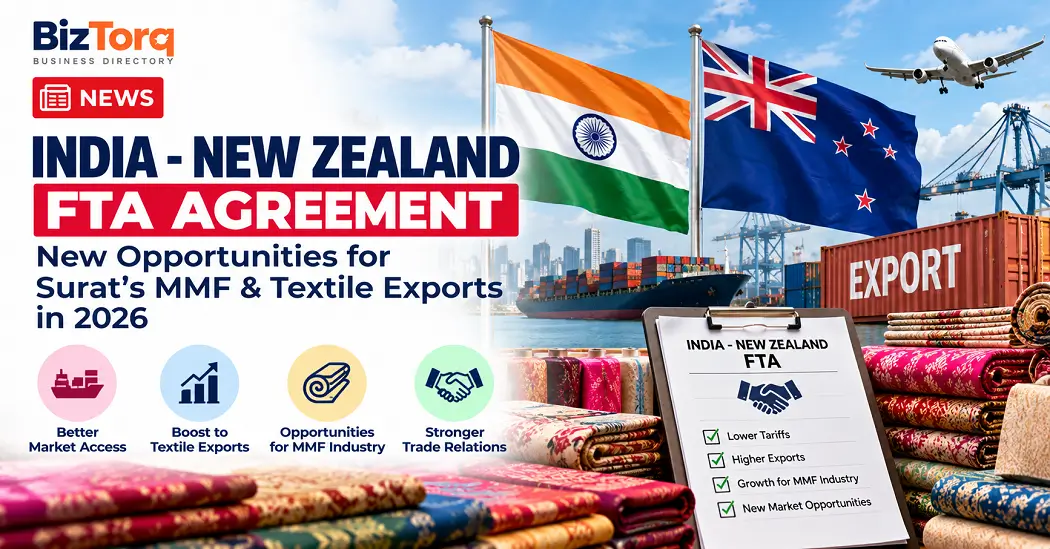
Surat’s man-made fibre (MMF) industry has gained a fresh international window following the entry into force of the India–New Zealand Free Trade Agreement (FTA). Under the agreement, hundreds of Indian textile tariff lines receive duty-free or preferential access, giving Surat manufacturers an edge over competitors in South-East Asia and China across Oceanian supply chains.
Moving Beyond Conventional Ethnic Wear
While Surat accounts for roughly 65% of India’s synthetic fabric output, the overwhelming majority of its exports have traditionally targeted diaspora pockets in the Middle East, UK, and North America in the form of unstitched sarees, kurtis, and polyester dress materials. Industry leaders note that unlocking real value from the New Zealand agreement requires pivoting to functional, sustainable, and technical fabrics.
According to trade analysts and representatives from the Man-Made Textiles Research Association (MANTRA), New Zealand and broader Oceanian buyers place high value on sustainable production certifications, recycled polyester (rPET) blends, outdoor sports fabrics, and home furnishing textiles.
Compliance and Technical Support from MANTRA
To help regional weavers and processing houses meet stringent import criteria, MANTRA is stepping up support with laboratory testing, performance evaluation, and product standardization:
- Rules of Origin (ROO): Ensuring that fabrics woven and dyed in South Gujarat meet value-addition criteria required for preferential duty rates.
- Quality Certification: Assisting MSMEs in verifying colorfastness, tear resistance, and chemical compliance for technical and performance apparel.
- Sustainable Finishing: Guiding dyeing and printing houses on eco-friendly processing and low-water-consumption digital printing techniques.
A Cushion Against Domestic Demand Cycles
With domestic yarn costs remaining volatile and festive retail off-take facing payment bottlenecks ahead of Diwali, expanding direct export footprints offers Surat weavers a more predictable revenue stream. Trade leaders stress that coupling manufacturing scale with innovation and international compliance is the single most viable path to protecting operating margins in 2026 and beyond.