
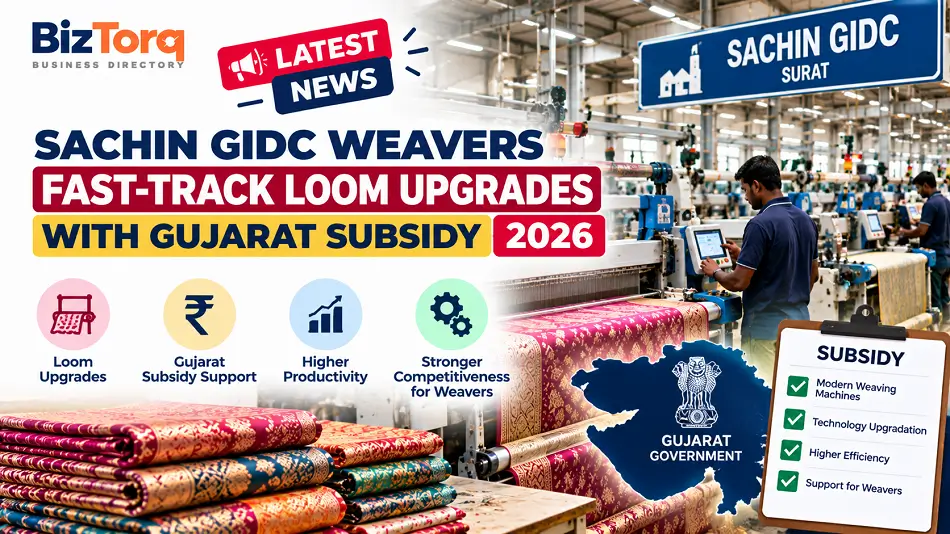
As conventional powerloom operations face tightening margins from rising synthetic yarn and processing costs, a wave of technological modernization is sweeping through Surat’s industrial estates. Weaving units across Sachin GIDC, Pandesara, Palsana, and Pipodara are taking advantage of the Gujarat Textile Policy (2024–2029) to replace older shuttle powerlooms with high-speed waterjet, airjet, and high-hook electronic jacquard looms.
The Economic Pull of the Gujarat Textile Policy
Under the operative policy guidelines, modernizing MSME weaving and technical textile setups can secure substantial state-backed assistance:
- Capital Subsidy: Up to 35% capital subsidy on eligible plant and machinery (capped up to ₹100 crore for mega units).
- Interest Subvention: 5% to 7% interest subsidy on term loans for up to five to seven years, significantly lowering project debt servicing costs.
- Power Relief: Power tariff subsidies of ₹1.00 per unit, helping offset recent industrial electricity rate escalations.
Productivity and Speed Multipliers
Traditional shuttle powerlooms operate at 120 to 150 picks per minute (PPM) with high manual defect rates. Modern shuttleless waterjets run reliably at 700 to 900+ PPM, while modern electronic rapier jacquards run at 350 to 450 PPM with computerized pattern drafting.
Master weavers in Sachin report that upgrading one shed of 48 waterjets increases daily fabric output by nearly 400% while cutting per-metre labor and power overheads by almost a third. With the Diwali break providing downtime for civil foundation work, machine suppliers report full installation schedules through November.
Preparing for High-Value B2B Fabrics
The modernization drive also reflects the strategic shift advocated by MANTRA. Transitioning away from low-margin commodity plain weaves allows local entrepreneurs to produce defect-free technical textiles, four-way stretch spandex fabrics, and intricate bridal jacquards required by export garmenters and institutional corporate buyers.