
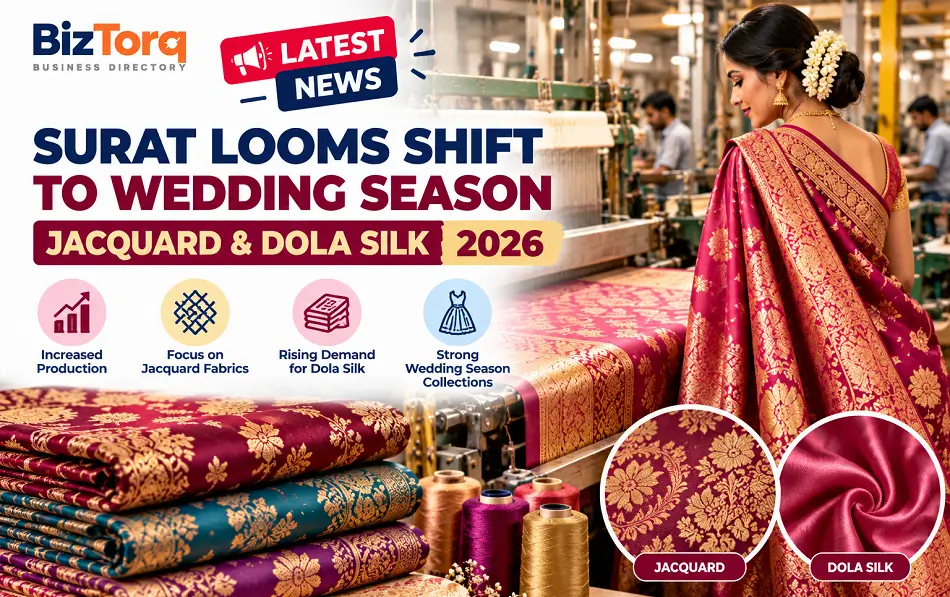
With only three days left before the 31 October transport dispatch cutoff for Diwali deliveries, Surat’s weaving sector has formally initiated its seasonal beam-changing cycle. Weaving units across Sachin GIDC, Pandesara, Anjani, and Kim-Pipodara are winding down production of lightweight festive georgette, chiffon, and daily-wear printed saree greige, re-warping looms for high-density winter wedding fabrics.
The Pivot to High-Value Wedding Weaves
Unlike Diwali buying, which relies heavily on high-volume, lower-ticket printed sarees and kurtis, the Indian wedding season (commencing in late November following Tulsi Vivah) demands structured, embellished, and premium yardage. Master weavers report strong advance sample inquiries for specific synthetic and semi-silk qualities:
- Dola Silk & Viscose Blends: Remains the top choice for regional garmenters and Varanasi-style digital printing, offering a heavy handfeel and rich drape at a fraction of pure silk prices.
- Organza Tissue & Metallic Warps: Weaving units report high loom engagement on shimmer tissue and lurex-infused synthetic warp fabrics used for bridal dupattas and lehenga flares.
- Rapier Jacquard Brocades: Units equipped with electronic jacquards are running double-beam weaving setups to produce intricate meenakari and border brocades for ethnic lehengas.
Managing Beam Changes Before the Festive Break
Weavers typically use the transition period between the pre-Diwali dispatch lull and the annual Diwali vacation (which begins on 5–6 November) to overhaul machines, change heald wires, and dress new beams. Federation of Gujarat Weavers Association (FOGWA) representatives note that preparing wedding warp beams now allows units to restart looms at full efficiency immediately after Labh Pancham without losing crucial trading days in mid-November.
While cash flow remains cautious due to delayed festive remittances, master weavers expect the wedding season to offer healthier operating margins (₹2.50 to ₹4.00 per metre on fancy weaves compared to less than ₹1.20 per metre on standard polyester plain weaves).