Quick answer
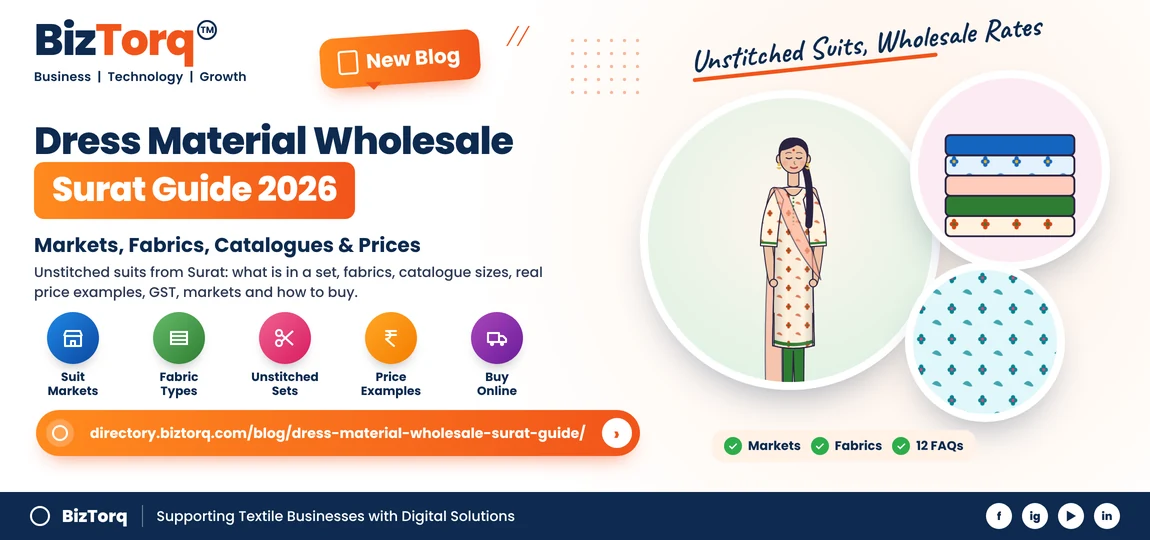
Dress material is an unstitched salwar suit: fabric for the top, bottom and dupatta, sold together. Surat wholesalers sell it in numbered catalogues (often 4 to 12 designs) at a rate per piece, with 5% GST at any price because it is fabric, not a garment. Top fabric is commonly about 2 to 2.5 m, the bottom about 2 to 2.5 m and the dupatta about 2.25 to 2.5 m. Rough wholesale bands run from about ₹250 for printed cotton to ₹3,000 for heavy party wear.
Dress materials are one of Surat’s biggest product lines, right next to sarees. They suit almost every shop: customers pick a design they like and get it stitched to their own size and style, so retailers do not have to worry about size mix. This guide explains what is in a set, the types and work you will see, how much fabric each style needs, what to expect to pay, and how to buy dress material wholesale from Surat without mistakes.
Contents
- What is in a dress material set
- Types of dress material in Surat
- Where the work sits on the top fabric
- How much fabric each style needs
- Dress material wholesale price range and GST
- How to buy dress material wholesale from Surat
- Quality checklist
- Who should stock which dress material
- FAQs
What Is in a Dress Material Set
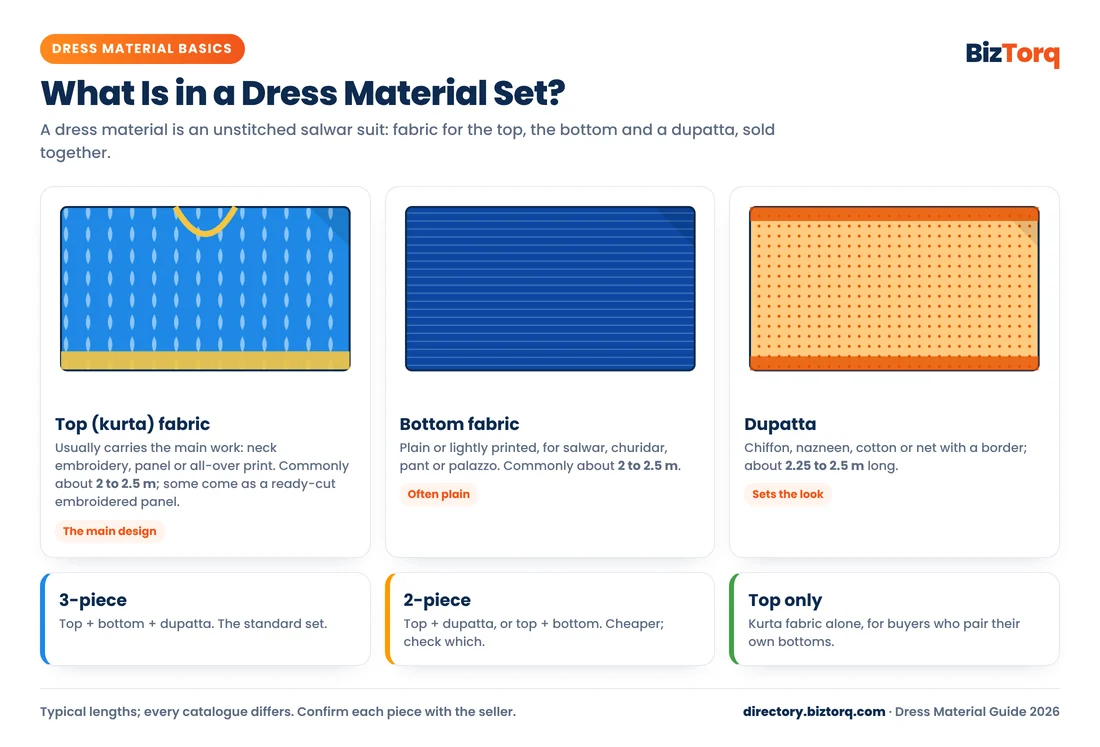
| Piece | Common length | What to check |
|---|---|---|
| Top (kurta) fabric | About 2 to 2.5 m, or a ready-cut panel | Where the work sits and whether it is enough for the style |
| Bottom fabric | About 2 to 2.5 m | Colour match with the top; plain or printed |
| Dupatta | About 2.25 to 2.5 m | Fabric (chiffon, nazneen, cotton, net) and border finish |
Always confirm whether a set is 3-piece, 2-piece or top only. A missing dupatta or bottom changes the value a lot, and customers notice. For fabric widths and metre-by-metre cuts, see the fabric widths and size guide.
Types of Dress Material in Surat
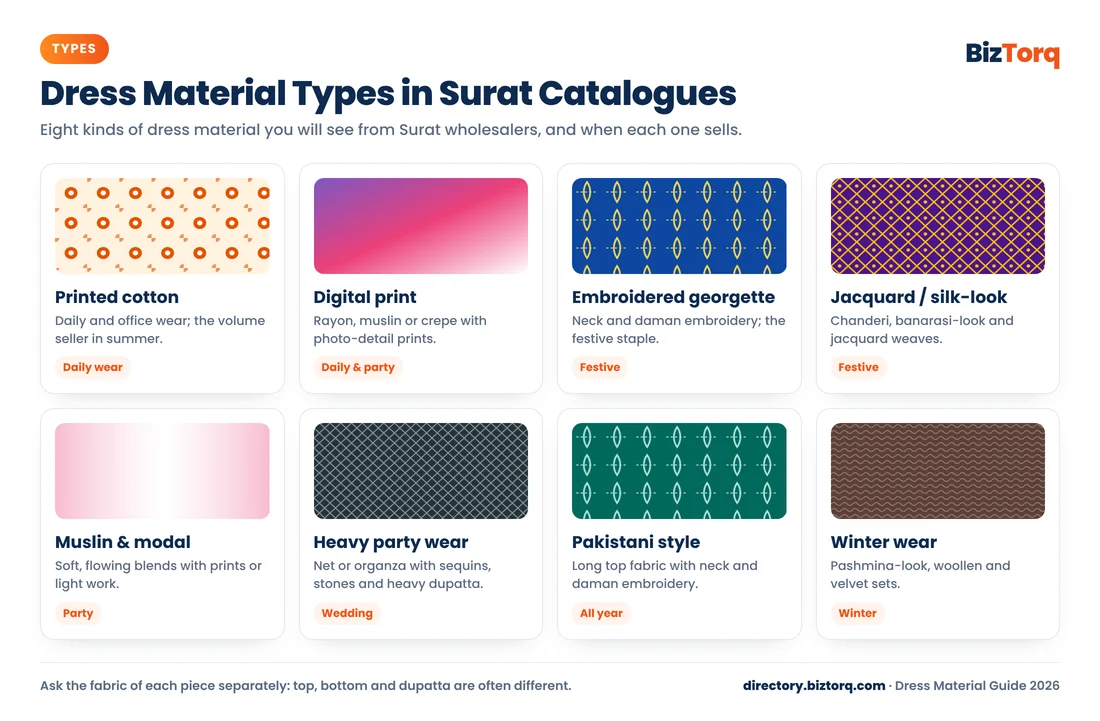
Printed cotton and rayon dress material
The daily and office-wear volume line, strongest in summer. Rayon and cotton prints are easy to wear and price well for small-town and regular retail. Ask whether the cotton is pre-shrunk.
Digital print dress material
Rayon, muslin or crepe printed straight from a design file, which allows photo-detail designs and short runs. A good choice for resellers who need new designs often. Learn how it is made in the digital printing and dyeing guide.
Embroidered georgette dress material
The festive staple: georgette top with neck and daman embroidery, matching bottom and a printed or embroidered dupatta. Surat’s machine embroidery units make this segment very competitive.
Jacquard, chanderi and silk-look
Woven-pattern and silk-look fabrics for festive buyers who want a richer look without heavy embroidery.
Pakistani-style dress material
Long top fabric with neck and daman embroidery, straight trouser fabric and a heavy dupatta. These sell all year; see the full Pakistani suits wholesale guide for styles and bottoms.
Heavy party and winter wear
Net and organza sets with sequins and heavy dupattas for weddings, and pashmina-look, woollen and velvet sets for winter. Both sell in short windows, so order before the season starts.
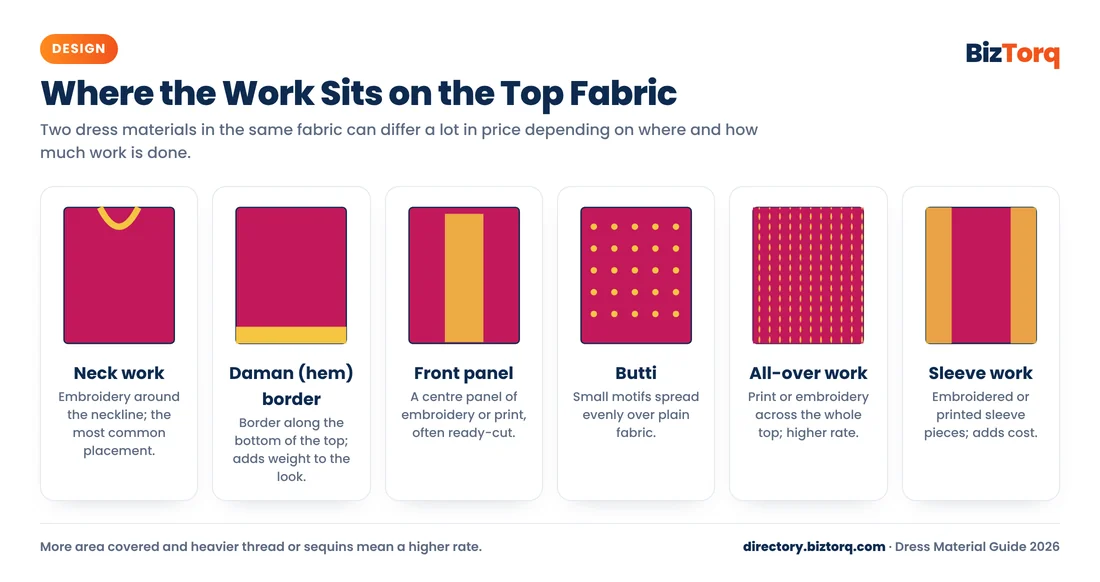
Where the Work Sits on the Top Fabric
Two dress materials in the same fabric can differ a lot in price depending on where and how much work is done on the top.
| Placement | What it is | Effect on rate |
|---|---|---|
| Neck work | Embroidery around the neckline | Low to mid; the most common |
| Daman border | Border along the hem of the top | Mid |
| Front panel | Centre panel, often ready-cut | Mid |
| Butti | Small motifs spread over plain fabric | Low to mid |
| Sleeve work | Embroidered or printed sleeve pieces | Adds to any of the above |
| All-over work | Print or embroidery across the whole top | Highest |
Compare like with like: same fabric, same placement, same amount of work. Our saree guide explains embroidery, zari and sequin work in more detail.
How Much Fabric Each Style Needs
Customers buy dress material to stitch a particular style. If the top piece is too short for an Anarkali, the tailor cannot make it, and the complaint comes back to the shop. Use this rough guide when choosing catalogues and when advising customers.
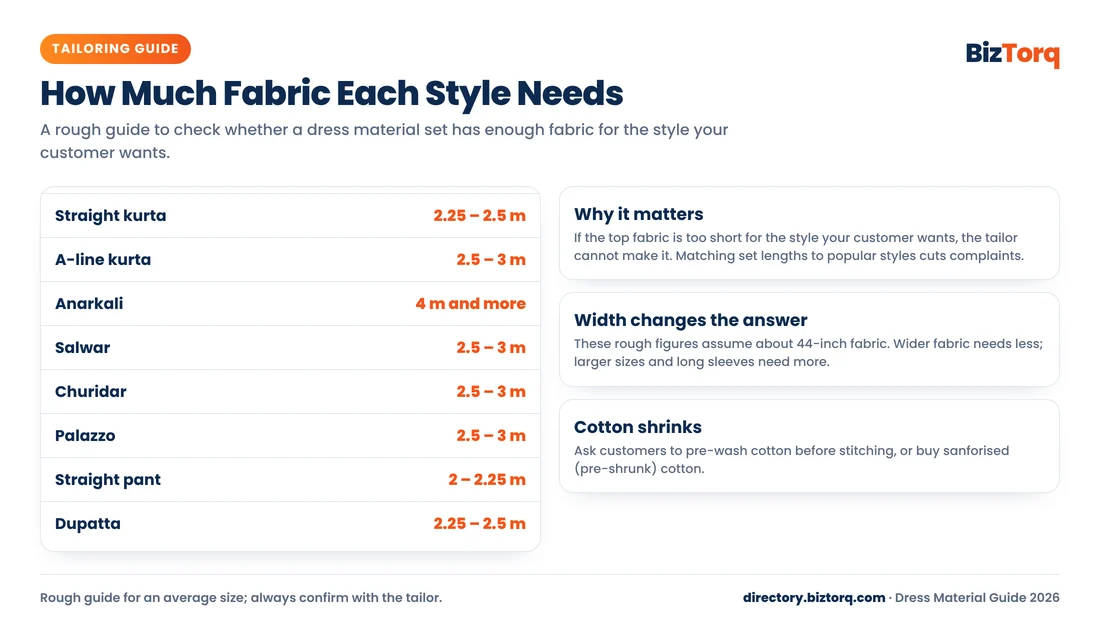
- Straight kurta: about 2.25 to 2.5 m. Most standard sets cover it.
- A-line kurta: about 2.5 to 3 m.
- Anarkali or flared styles: 4 m or more; a normal set is usually not enough.
- Salwar, churidar or palazzo: about 2.5 to 3 m; straight pants need less.
Wider fabric needs less length; larger sizes and full sleeves need more.
Dress Material Wholesale Price Range and GST
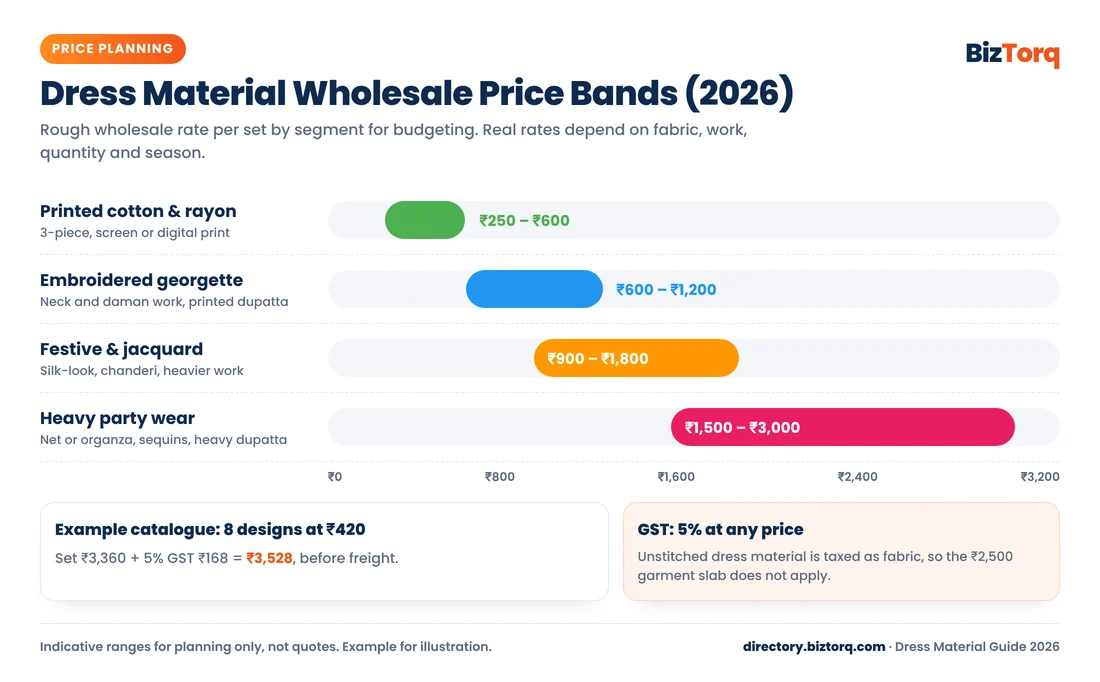
| Segment | Typical make | Indicative wholesale rate per set |
|---|---|---|
| Printed cotton and rayon | 3-piece, screen or digital print | About ₹250 to ₹600 |
| Embroidered georgette | Neck and daman work, printed dupatta | About ₹600 to ₹1,200 |
| Festive and jacquard | Silk-look, chanderi, heavier work | About ₹900 to ₹1,800 |
| Heavy party wear | Net or organza, sequins, heavy dupatta | About ₹1,500 to ₹3,000 |
Unstitched dress material is taxed as fabric at 5% GST at any price, so the ₹2,500 garment slab does not apply. That is one reason dress material is easier to price than readymade suits; see GST on textiles.
Rates rose through 2026 as yarn, power, coal and processing costs went up, so re-confirm every rate list. Read why Surat fabric prices rose in 2026, and work out your shop price with the dress material margin calculator.
How to Buy Dress Material Wholesale from Surat
- Pick your segment: daily printed, festive embroidered, Pakistani style, wedding or winter, and a price band per set.
- Shortlist wholesalers on dress material wholesalers in Surat, and browse ready designs with rate and MOQ in the dress material catalog.
- Know the market area: most wholesale is around Ring Road; see the Surat market directory.
- Ask in one message for catalogue photos, rate per piece, number of designs, MOQ, whether singles are allowed, pieces included, length of each piece and dispatch time.
- Order one catalogue first and run the checklist below.
- Verify the seller with our supplier check, and agree payment terms.
- Book dispatch through the Transporter Finder and keep the LR (bilty) number; see the freight and bilty guide.
Ordering remotely? Read how to buy from Surat online. Visiting? Check the market open today page and the first-time visiting guide. New to trade terms such as catalogue, singles and MOQ? See the trade glossary.
Dress Material Quality Checklist
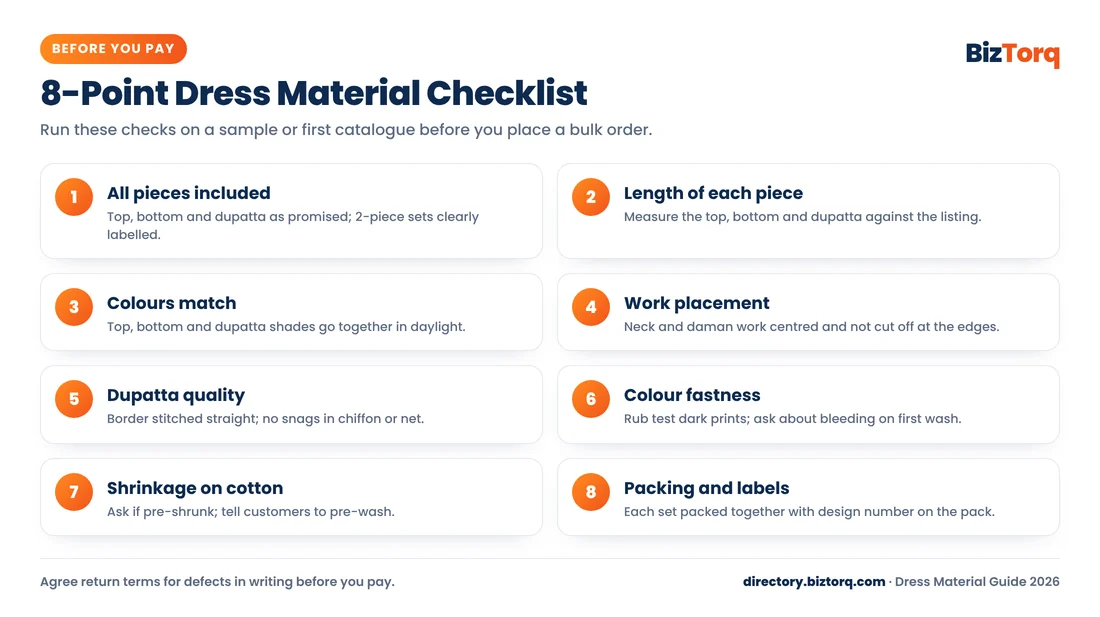
For deeper fabric checks such as GSM, weave and shrinkage, read how to check fabric quality.
Who Should Stock Which Dress Material
| You are a… | Start with | Why |
|---|---|---|
| Town or village retailer | Printed cotton and rayon catalogues | Low price points, fast turnover, strong tailoring culture |
| Boutique | Embroidered georgette, jacquard and a few heavy sets | Higher margin and repeat festive buyers |
| WhatsApp or Instagram reseller | Digital print and Pakistani-style sets | Photograph well and change often |
| Online store | Mid-range sets with clear piece lengths listed | Fewer returns when lengths and pieces are clear |
Starting a business? Read how to start a reselling business or how to start a boutique.
Frequently Asked Questions
What is dress material?
Dress material is an unstitched salwar suit: fabric for the top (kurta), the bottom and usually a dupatta, sold together as a set. The buyer has it stitched by a tailor in the style and size they want.
What is included in a dress material set?
A 3-piece set has top, bottom and dupatta fabric. A 2-piece set has the top with either the dupatta or the bottom. Some sets are top only. Each listing should say which pieces are included.
What is the length of top fabric in dress material?
Top fabric is commonly about 2 to 2.5 metres, but it varies by design, and some sets come with a ready-cut embroidered panel instead. Ask the wholesaler for exact measurements before ordering.
How much fabric is needed to stitch a salwar suit?
As a rough guide for about 44-inch fabric and an average size: a straight kurta needs about 2.25 to 2.5 metres, a salwar or churidar about 2.5 to 3 metres, and an Anarkali 4 metres or more. Confirm with the tailor, since size, sleeves and width change it.
Is Surat good for buying dress material wholesale?
Yes. Surat is one of India’s biggest hubs for dress materials, especially in georgette, rayon, crepe and other man-made fabrics, with printing and embroidery units in the same city. Wholesalers release numbered catalogues every season.
What is the wholesale price of dress material in Surat?
It depends on fabric, work and quantity. As rough planning bands, printed cotton and rayon sets start around ₹250 to ₹600, embroidered georgette around ₹600 to ₹1,200, festive and jacquard around ₹900 to ₹1,800, and heavy party wear ₹1,500 to ₹3,000. Confirm current rates with each wholesaler.
What is the minimum order for dress material in Surat?
Most wholesalers sell the full catalogue, often 4 to 12 designs. Some allow single designs at a higher rate per piece. The MOQ is usually stated with the catalogue.
Can I buy single dress materials from a catalogue?
Some Surat wholesalers sell singles, usually at a higher rate than the full set, but many sell full catalogues only. Ask before ordering, especially if you are a small retailer or reseller.
What is the GST on dress material?
Unstitched dress material is taxed as fabric at 5% GST at any price. The ₹2,500 slab applies only to stitched garments. See the fabric HSN finder.
What is the difference between dress material and a readymade suit?
Dress material is unstitched fabric that the customer gets tailored; a readymade suit is already stitched and sold by size. Dress material fits any size and is taxed at 5%; readymade suits save tailoring but need the right size mix.
Which dress material sells best?
Printed cotton and rayon sell steadily for daily and office wear, embroidered georgette and Pakistani-style sets lead in the festive season, and heavy net or organza sets sell for weddings.
How do I check dress material quality?
Check that every piece is included and long enough, that the top, bottom and dupatta colours match, that neck and daman work is centred, and rub-test dark prints. Read our fabric quality guide.
Does cotton dress material shrink?
Cotton can shrink after the first wash unless it is sanforised (pre-shrunk). Ask the seller, and tell your customers to pre-wash cotton before stitching.
Can I buy dress material from Surat online?
Yes. Most wholesalers share catalogues on WhatsApp and ship by transporter or courier. Browse designs in the dress material catalog and read how to buy from Surat online.
Find Dress Material Wholesalers in Surat
Browse the dress material catalog, compare dress material wholesalers in Surat, and price your stock with the dress material margin calculator.
Are you a dress material wholesaler? List your shop free, add your catalogues to the wholesale catalog, check your online readiness score, or let BizTorq build your wholesale website with catalogue-wise selling, MOQ and WhatsApp ordering.
Price bands and fabric lengths are indicative and for planning only. Rates and practices change; confirm details with the wholesaler and your tailor before ordering.