
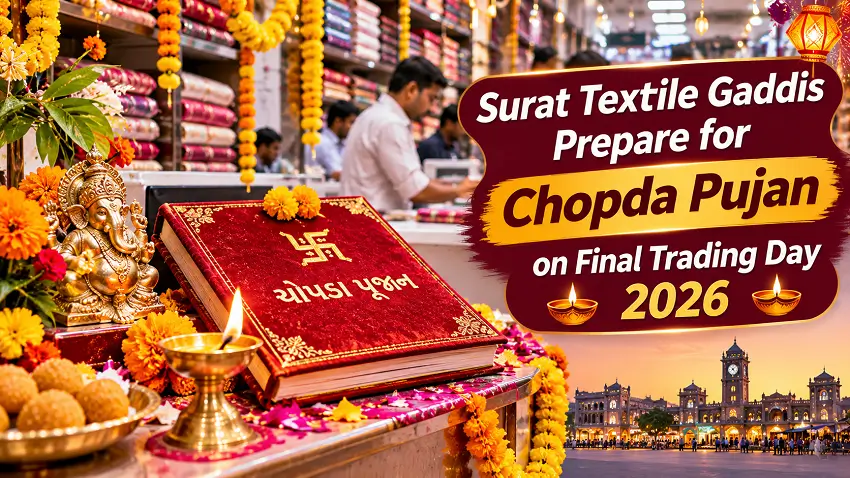
The bustling wholesale showrooms and traditional trading gaddis across Surat’s 220+ textile markets are shifting focus from merchandise sales to annual financial reconciliation. With Wednesday, 4 November marking the final working day before the markets shut for the festive recess, accountants and merchant proprietors are working extended hours to balance customer ledgers, reconcile bank remittances, and prepare for the auspicious Chopda Pujan on Diwali day (Sunday, 8 November 2026).
Reconciliation of Extended Outstation Ledgers
Following two months of active trading that saw over ₹800 crore in local cash clearances over the past weekend alone, merchants along Ring Road, Salabatpura, and Saroli are balancing outstation dealer balances. Particular attention is being paid to credit notes issued for rate differences, short-meterage allowances, and freight adjustments on parcels shipped to Uttar Pradesh, Bihar, and West Bengal.
Chartered accountants in Surat note that closing books for the Hindu financial year (Samvat 2082) coincides with statutory obligations, requiring traders to reconcile purchase registers with supplier GSTR-2B statements to secure legitimate Input Tax Credit (ITC) before year-end books close.
The Ritual of Chopda Pujan in the Digital Era
Despite the widespread adoption of modern cloud ERPs and computerized billing systems, the historic ritual of Chopda Pujan remains central to Surat’s business culture. Stationers and religious bookbinders around Bhagal, Chauta Bazaar, and Sahara Darwaja report brisk sales of traditional red cloth-bound ledger books (khatavahi), auspicious brass inkstands, and saffron ink.
On Diwali morning (8 November), merchants will open their gaddis to perform Lakshmi-Ganesh Puja, inscribe the traditional “Shree” and “Labh-Shubh” emblems in their new books, and simultaneously perform ceremonial puja on computer accounting servers and desktop billing systems.
Looking Ahead to the Wedding Season Restart
While powerlooms in Sachin GIDC and Pandesara will remain silent over the coming ten days, market associations report solid optimism for the new trading year. With wedding dates commencing across North and Western India in late November, merchants expect robust reorders for bridal jacquards, fancy Dola silks, and heavy embroidered sets as soon as markets reopen on Labh Pancham (16 November 2026).