
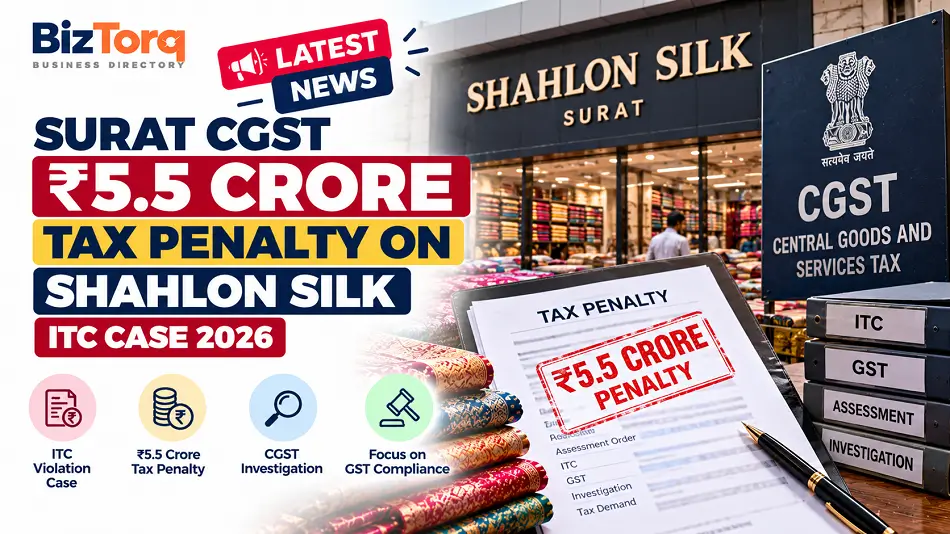
The Central GST enforcement drive across South Gujarat’s synthetic textile hub has claimed another high-profile target. The Additional Commissioner of Central GST and Central Excise, Surat Commissionerate, has passed an Order-in-Original (Order No. SURAT/GST/ABS/52/2026-27) slapping a ₹5.50 crore tax demand, interest, and equivalent penalty on leading synthetic fabric and yarn manufacturer Shahlon Silk Industries Limited over alleged wrongful Input Tax Credit (ITC) utilization.
The Root of the Dispute: Multi-Year ITC Scrutiny
According to regulatory disclosures made by the company, the tax demand pertains to credit claims filed during the 2023–24 and 2024–25 financial years. The proceedings originated from a Show Cause Notice issued in March 2026, where audit authorities questioned credit taken on upstream synthetic filament yarn, texturising consumables, and job-work invoices.
The Surat tax wing alleged that portions of the credit claimed in GSTR-3B filings did not match supplier disclosures in GSTR-2B or involved vendors whose registrations were cancelled retrospectively. Shahlon Silk has confirmed receipt of the order and stated that it is consulting legal counsel to challenge the order before the Appellate Authority, maintaining that all inputs were backed by physical deliveries, valid e-way bills, and commercial banking channels.
Widening Enforcement Across Pandesara and Sachin
This penalty order follows a string of similar actions across Surat’s synthetic weaving and processing clusters in late October, coming days after a massive ₹18.40 crore demand notice was issued to Supertex Industries. Trade tax consultants in Surat note that automated mismatch notices under Section 16(2)(c) are hitting mid-tier composite mills and yarn processors with unprecedented frequency.
The core grievance among local processors remains the structural mismatch of the textile supply chain: smaller raw material suppliers in the informal market occasionally fail to file quarterly returns on time, leaving compliant purchasing mills liable to defend their legitimate tax credits against department recovery drives.
Appeals and Pre-Deposit Constraints
With Diwali dispatches winding down and working capital stretched across the trade, high-quantum tax demands pose severe cash flow hurdles. To appeal an Order-in-Original before the Joint Commissioner (Appeals), units must deposit a mandatory 10% pre-deposit of the disputed tax amount, locking up funds at a time when festive remittances remain slow.